

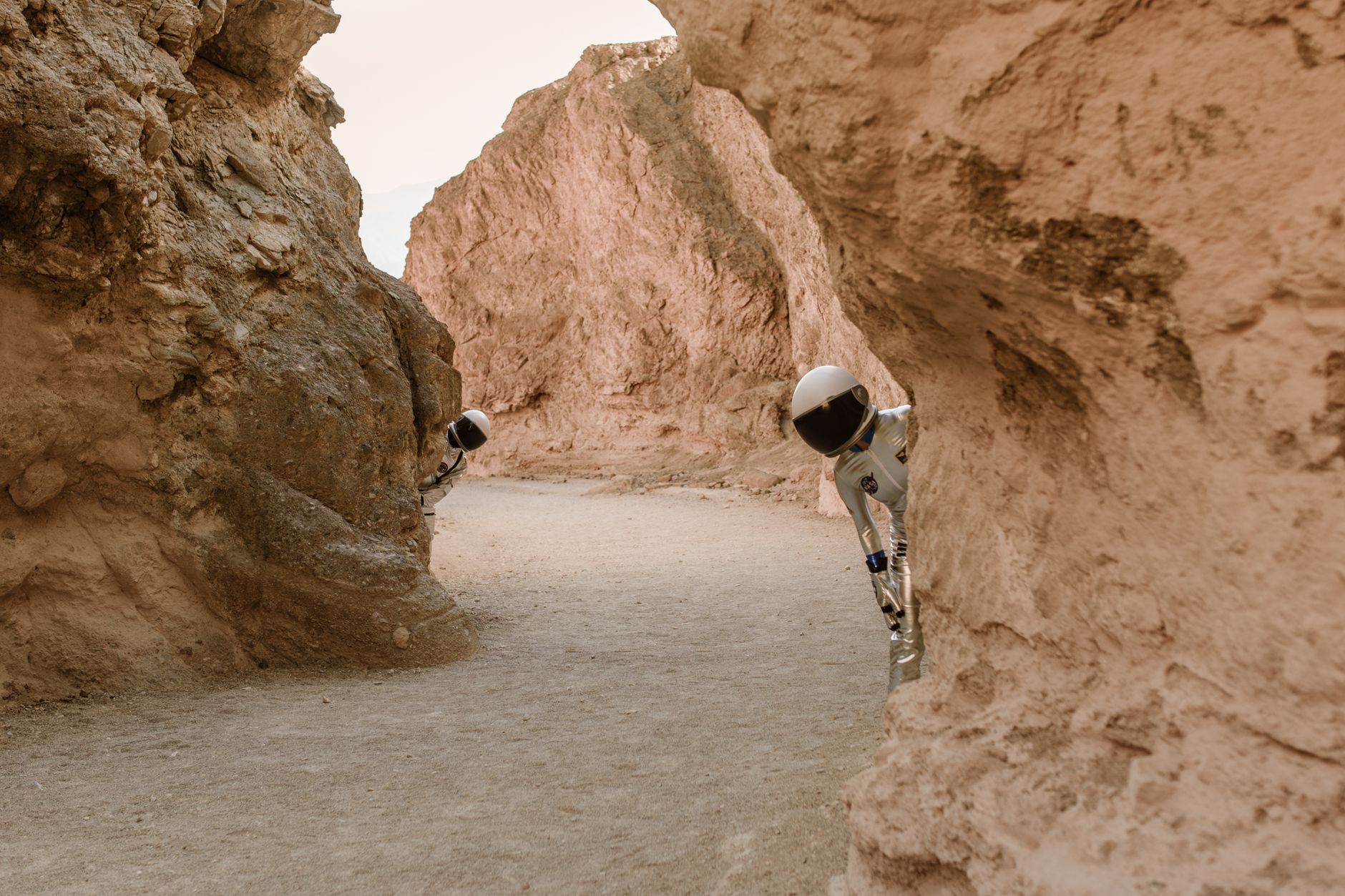
mysterious shapes on Mars are capturing the attention of scientists as NASA investigates these unusual formations. The ‘potato chip’ shapes raise questions about the planet’s geological history and potential for life.
What are the mysterious shapes on Mars?
Recently, NASA has turned its attention to the intriguing and mysterious shapes on Mars, sparking curiosity among scientists and space enthusiasts alike. These peculiar formations, resembling ‘potato chips’, have been captured in high-resolution images by the Mars Reconnaissance Orbiter. The shapes are not only visually striking but also raise questions about the geological processes at play on the Red Planet.
Researchers are currently analyzing these formations to understand their origin and significance. Some theories suggest they could be the result of ancient volcanic activity, while others propose they may be linked to sedimentary processes.
As scientists delve deeper into the investigation, they are employing various methods to study the chemical composition and structural characteristics of the shapes. This comprehensive examination may offer insights into Mars’ past environment and its potential to support life.
In summary, the mysterious shapes on Mars represent a fascinating puzzle that could enhance our understanding of the planet’s history and geological evolution.
NASA’s investigation process
Nasa’s investigation process into the mysterious shapes on Mars has gained significant attention from scientists worldwide. The agency employs a combination of advanced imaging techniques and robotic exploration to gather data about these enigmatic formations.
Initially, researchers analyze high-resolution images captured by Mars orbiters, which reveal the unique structures resembling potato chips. These images allow scientists to study the shapes’ dimensions and surface characteristics in detail.
Next, NASA utilizes landers and rovers equipped with sophisticated instruments to conduct on-site examinations. These robotic explorers collect samples and perform geological tests, providing insights into the composition and formation of the mysterious shapes on Mars.
Moreover, interdisciplinary teams collaborate to interpret findings, drawing from fields such as geology, climatology, and astrobiology. This comprehensive approach aims to uncover the origins of these formations, whether they are the result of natural processes, erosion, or even potential microbial life.
The ongoing investigation promises to shed light on the mysteries of our neighboring planet.
Potential implications for Martian geology
The discovery of the mysterious shapes on Mars has sparked significant interest in the scientific community. These peculiar formations may hold valuable insights into the planet’s geological history. Understanding their origins could lead to a deeper comprehension of past environmental conditions on Mars.
Scientists propose several hypotheses regarding the formation of these shapes, each with potential implications:
- Volcanic Activity: If the shapes are linked to past volcanic processes, it could indicate a more active geological history than previously thought.
- Water Activity: The presence of these shapes might suggest ancient water flow, hinting at a time when Mars could have supported microbial life.
- Wind Erosion: If shaped by wind, this could provide insights into the planet’s atmospheric conditions and climate evolution.
As NASA continues to investigate the mysterious shapes on Mars, the eventual findings could reshape our understanding of the Martian landscape and its potential for past life.
How do these shapes compare to Earth?
The recent discovery of mysterious shapes on Mars has led to intriguing comparisons with geological formations found on Earth. Scientists are particularly fascinated by the similarities and differences between the two planets’ terrains.
On Earth, various landforms, such as mushroom rocks and goblin rocks, exhibit unique shapes caused by erosion and weathering. These processes, driven by water and wind, have created a diverse landscape that often sparks curiosity. Similarly, the shapes observed on Mars, described as resembling potato chips, have raised questions about how they were formed.
While Earth’s features are primarily influenced by its atmosphere and liquid water, Martian formations may have resulted from different factors, including volcanic activity and wind erosion in a much drier environment. This comparison not only enhances our understanding of planetary geology but also emphasizes the potential for discovering new geological processes that could exist beyond our home planet.
Scientific theories about the formations
Scientists are exploring several theories regarding the mysterious shapes on Mars. One prominent theory suggests that these formations may be the result of unique geological processes influenced by the planet’s harsh environment. Some researchers propose that the shapes are formed by the freezing and thawing of the Martian surface, which could create distinctive patterns over time.
Another hypothesis posits that the formations might be linked to ancient volcanic activity. The interaction between lava flows and the Martian atmosphere could potentially lead to the creation of these intriguing structures. Furthermore, the shapes could also be a product of erosion caused by wind, which has been a significant force on Mars.
Additionally, scientists are investigating whether these formations have any connection to past microbial life on the planet. As the investigation unfolds, researchers hope to gather more data to determine if the mysterious shapes on Mars could offer insights into the planet’s geological history or even the potential for past life.
Public interest in Mars exploration
The recent discovery of mysterious shapes on Mars has sparked a surge of public interest in Mars exploration. Citizens around the globe are captivated by the potential implications of these findings, igniting a renewed enthusiasm for space science. As images of the unusual formations circulate on social media, many are left pondering the origins and significance of these shapes.
NASA’s investigation has not only attracted the attention of scientists but also of amateur astronomers and enthusiasts who are eager to learn more about the red planet. Public forums and online discussions have flourished, with individuals speculating about the possible geological processes that could lead to such formations.
Additionally, educational programs and outreach initiatives are being launched to engage young minds in the mysteries of Mars. Schools and universities are incorporating these findings into their curriculums, fostering a new generation of scientists and explorers driven by the allure of the unknown. The mysterious shapes on Mars have undoubtedly reignited humanity’s passion for space exploration.
Future missions to Mars
As NASA continues its investigation into the mysterious shapes on Mars, future missions are being planned to delve deeper into the enigma surrounding these formations. Scientists are eager to gather more data, which could provide insight into the geological processes that led to the creation of these peculiar structures.
Upcoming missions are expected to utilize advanced technology, including:
- Rovers equipped with sophisticated imaging and analysis tools to study the shapes up close.
- Orbiters that will capture high-resolution images of the Martian surface, allowing for detailed mapping of the formations.
- Sample return missions that could bring back material from Mars for laboratory analysis on Earth.
Moreover, collaborations between international space agencies are likely to enhance the scope of these explorations. As interest in Mars exploration grows, the quest to understand the mysterious shapes could pave the way for groundbreaking discoveries about the planet’s history and potential for life.
The role of technology in space research
The investigation of the mysterious shapes on Mars has been significantly enhanced by advancements in technology. Over the past few decades, tools such as high-resolution cameras and sophisticated imaging software have allowed scientists to capture and analyze data from the Martian surface like never before.
Among the various technological innovations, satellite imagery plays a crucial role. Satellites orbiting Mars can provide detailed photographs that reveal subtle features, helping researchers to identify and study these enigmatic formations. Additionally, rover missions equipped with advanced sensors and analytical instruments enable direct examination of the terrain, offering invaluable insights into the planet’s geology.
Furthermore, the application of machine learning algorithms allows researchers to process vast amounts of data efficiently, identifying patterns and anomalies that may be linked to the mysterious shapes. This synergy between technology and space research not only deepens our understanding of Mars but also fuels public interest in ongoing and future exploration endeavors.
Photo by RDNE Stock project on Pexels
Sources
- HarmBench LLM Red-Teaming: The Best Proven Guide
- GTA 6 screenshots: Dynamic weather impacts gameplay in Leonida
- AI cybersecurity startup: Is Corma’s funding a smart move?