

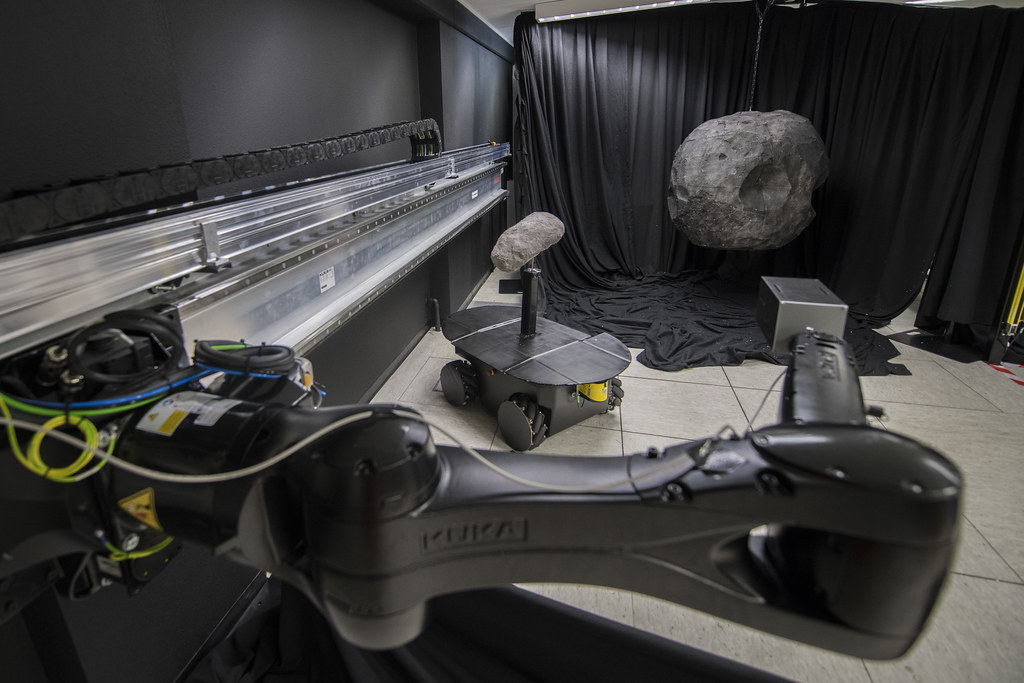
The Hera asteroid mission has successfully resolved two asteroids instead of one, providing valuable insights into these celestial bodies. This groundbreaking achievement marks a significant milestone in our exploration of space.
Overview of the Hera Asteroid Mission
The Hera asteroid mission has made significant strides in its exploration of two asteroids, providing researchers with invaluable insights. Designed to study the binary asteroid system, Hera aims to enhance our understanding of these celestial bodies and their formation. The mission is part of a collaborative effort with NASA’s DART (Double Asteroid Redirection Test) mission, which successfully impacted the asteroid Dimorphos in 2022.
One of the most remarkable aspects of the Hera mission is its ability to resolve both asteroids in the binary system. This achievement marks a major milestone for scientists, who were initially focused on understanding only one of the asteroids. By examining both, the mission promises to uncover vital data regarding their physical properties, composition, and potential for future exploration.
The Hera spacecraft is equipped with advanced instruments that will allow it to gather detailed measurements and images of the asteroids’ surfaces. This information will contribute to a more comprehensive model of how asteroids evolve over time and their role in the broader context of our solar system.
Key Findings from the Asteroid Resolutions
The Hera asteroid mission has yielded remarkable insights into two asteroids, revealing unexpected details that challenge previous assumptions. The mission’s primary goal was to study the binary asteroid system of Didymos and its moonlet, Dimorphos, but findings indicate that there is more to these celestial bodies than initially thought.
Key findings from the asteroid resolutions include:
- Diverse Surface Composition: Preliminary data suggests that the surface materials of both asteroids differ significantly, hinting at varied origins and formation processes.
- Irregular Shapes: The asteroids possess irregular shapes that may impact their gravitational interactions, posing new questions about their evolution over time.
- Impact Craters: Detailed imaging has unveiled numerous impact craters, offering insights into the history of collisions these bodies have faced.
- Moons and Debris: Hera’s observations indicate that Dimorphos may have a complex history of debris generation, which could inform future studies of asteroid dynamics.
These findings underscore the significance of the Hera asteroid mission in enhancing our understanding of asteroid systems and their role in the solar system’s history.
Impact of Two Asteroids on Space Science
The Hera asteroid mission has provided invaluable insights into the complex dynamics of two asteroids, significantly impacting our understanding of space science. The mission’s ability to resolve both asteroids has opened new avenues for research and exploration.
Key impacts of studying these two asteroids include:
- Enhanced Knowledge of Asteroid Composition: By analyzing the surface materials and structures, scientists can better understand the formation of the solar system.
- Improved Modeling of Asteroid Orbits: Insights from the Hera mission aid in refining models that predict the movement and potential threat of near-Earth objects.
- Technological Advancements: The mission has tested new technologies for asteroid navigation and observation, which could be beneficial for future missions.
- Public Engagement: The dual asteroid focus has sparked public interest in space exploration, promoting education and awareness about planetary defense.
Overall, the Hera asteroid mission exemplifies how studying two asteroids can significantly enrich our understanding of the universe and enhance our capabilities in monitoring potential threats from space.
Future of Asteroid Exploration
The future of asteroid exploration is being dramatically reshaped by missions like the Hera asteroid mission, which has set a new precedent for how we study and understand these celestial bodies. As technology advances, the potential for deeper insights into the formation and evolution of our solar system continues to grow.
Future missions may build on the findings from Hera, exploring not just the physical characteristics of asteroids, but also their potential for resource utilization. Key areas of interest include:
- Mining potential: Asteroids are rich in metals and other resources, which could be essential for future space missions and even terrestrial applications.
- Planetary defense: Understanding the composition and trajectory of asteroids is crucial for developing strategies to mitigate potential threats to Earth.
- Scientific collaboration: The Hera mission encourages international partnerships, paving the way for cooperative exploration efforts.
As more missions are planned, the insights gained from the Hera asteroid mission will prove invaluable for guiding future research and exploration, marking a significant chapter in humanity’s quest to understand the cosmos.
By europeanspaceagency via Openverse
Read the original
Related stories
Gemini 4 Carbon: The Best AI Model for Your Needs · SpaceX Ship 42: Best Proven Static Fire Test Success · npm package firewall: Is It the Best Way to Block Threats?